
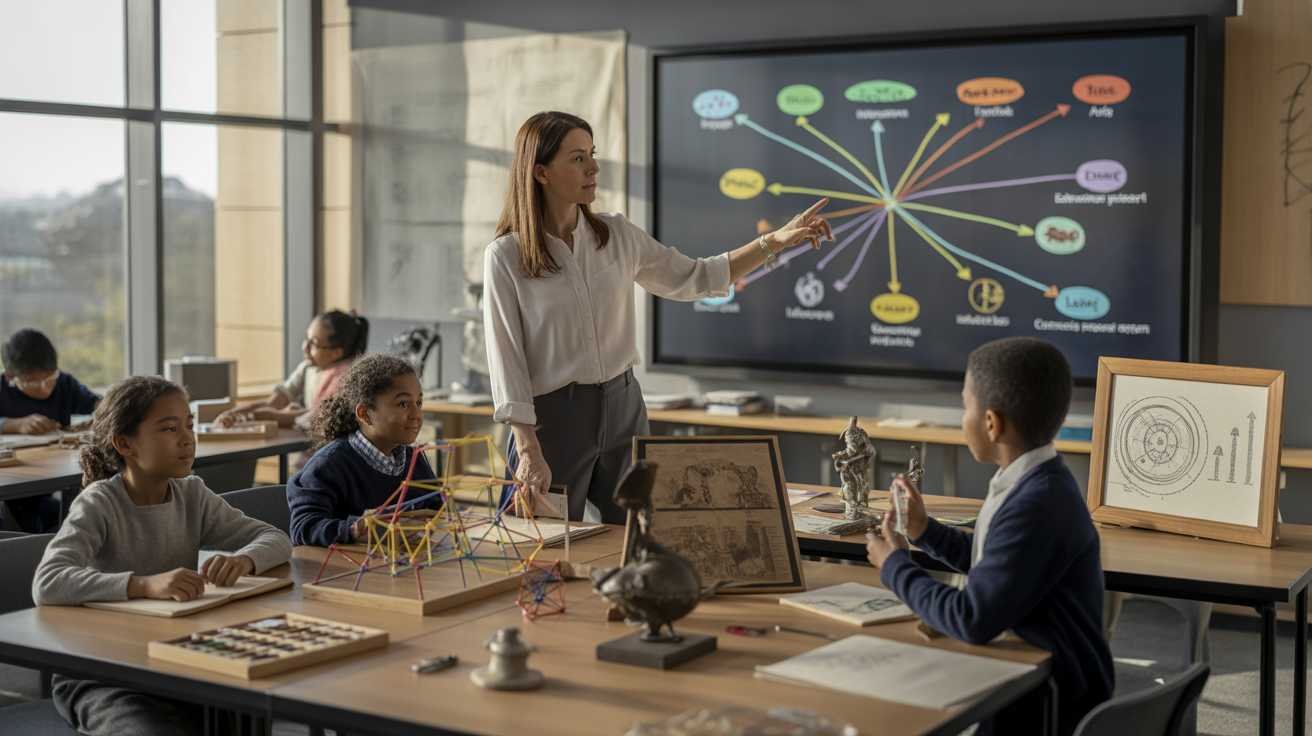
In the rapidly evolving educational landscape, the demand for students to possess a diverse skill set has never been more pressing. Educators are tasked with preparing students not just for academic success but for real-world challenges that require a blend of knowledge across various disciplines. Integrating cross-disciplinary skills into classroom lessons is no longer a luxury; it’s a necessity. This approach not only enriches the learning experience but also equips students with the tools they need to navigate the complexities of the modern world.
Understanding Cross-Disciplinary Learning
At its core, cross-disciplinary learning involves the integration of concepts, skills, and methodologies from multiple disciplines to enhance the learning experience. This approach encourages students to make connections between subjects, fostering a deeper understanding and application of knowledge. For instance, a project that combines elements of science, technology, engineering, and mathematics (STEM) with art can lead to innovative solutions and creative expressions. By breaking down the silos between subjects, educators can create a more holistic learning environment that mirrors the interconnectedness of real-world problems.
The benefits of cross-disciplinary learning are manifold. It promotes critical thinking, problem-solving, and collaboration – skills that are indispensable in today’s workforce. Moreover, it caters to diverse learning styles, ensuring that all students have the opportunity to engage with the material in a meaningful way. As the world becomes increasingly complex, the ability to draw upon knowledge from various fields is crucial for success.
Strategies for Effective Integration
Implementing cross-disciplinary learning requires thoughtful planning and collaboration among educators. One effective strategy is project-based learning (PBL), where students work on a project over an extended period, integrating knowledge and skills from multiple disciplines. For example, students might design a sustainable garden that incorporates principles of biology, environmental science, and mathematics. Through this hands-on approach, students not only learn theoretical concepts but also apply them in a practical context, enhancing their understanding and retention.
Another strategy is thematic instruction, where a central theme ties together various subjects. A theme like “Exploration” can encompass history, geography, literature, and science, allowing students to explore the topic from multiple perspectives. This approach encourages students to see the connections between subjects and understand the broader context of their learning.
Collaboration among educators is also vital. When teachers from different disciplines work together to design and implement lessons, they can create more cohesive and engaging learning experiences. This collaboration not only benefits students but also fosters a professional learning community among educators, enhancing their own professional development.
Overcoming Challenges
Despite its advantages, integrating cross-disciplinary skills into classroom lessons presents several challenges. One significant hurdle is the traditional structure of educational systems, which often compartmentalize subjects and discourage interdisciplinary approaches. Overcoming this requires a shift in mindset, where the focus moves from teaching discrete subjects to fostering an integrated learning experience.
Another challenge is the lack of resources and training for educators. Teachers may feel unprepared to implement cross-disciplinary strategies without adequate support. Professional development opportunities and access to resources are essential to equip educators with the skills and knowledge needed to effectively integrate cross-disciplinary learning.
Time constraints also pose a challenge. Designing and implementing cross-disciplinary lessons requires additional planning and coordination, which can be difficult within the confines of a standard school schedule. Schools must recognize the value of this approach and allocate time and resources accordingly to ensure its success.
Real-World Applications
Integrating cross-disciplinary skills into classroom lessons has profound implications for real-world applications. In the workforce, employees are often required to draw upon knowledge from various fields to solve complex problems. For instance, a software developer may need to understand user psychology (psychology), design principles (art), and coding languages (computer science) to create an effective application. By fostering these cross-disciplinary skills in students, educators are preparing them for the demands of the modern workplace.
Moreover, cross-disciplinary learning encourages innovation. When students are exposed to diverse perspectives and approaches, they are more likely to think creatively and develop novel solutions. This is particularly important in fields such as technology and healthcare, where innovation drives progress and improvement.
Educational institutions that embrace cross-disciplinary learning are also better positioned to adapt to changes in the educational landscape. As new fields emerge and existing ones evolve, the ability to integrate knowledge across disciplines ensures that students remain relevant and competitive in the global economy.
Case Studies and Success Stories
Numerous schools and educational programs have successfully implemented cross-disciplinary strategies with remarkable results. For example, the High Tech High schools in California have adopted a project-based learning approach that integrates various disciplines. Students work on projects that require them to apply knowledge from multiple subjects, leading to deeper learning and greater engagement.
Similarly, the International Baccalaureate (IB) program emphasizes interdisciplinary learning through its Middle Years Programme (MYP) and Diploma Programme (DP). These programs encourage students to make connections between subjects and apply their learning in real-world contexts, fostering critical thinking and global awareness.
These success stories highlight the effectiveness of cross-disciplinary learning and serve as models for other institutions looking to enhance their educational practices. By learning from these examples, educators can implement similar strategies tailored to their unique contexts and student populations.
Incorporating Technology
Technology plays a pivotal role in facilitating cross-disciplinary learning. Digital tools and resources can help bridge the gap between subjects and provide students with opportunities to collaborate and create. For instance, online platforms allow students to work together on projects, share resources, and communicate effectively, regardless of geographical barriers.
Moreover, technology enables access to a wealth of information and resources that can enrich the learning experience. Virtual simulations, educational games, and interactive media can bring abstract concepts to life, making learning more engaging and accessible.
Educators can leverage technology to design and implement cross-disciplinary lessons that are dynamic and interactive. By incorporating digital tools into their teaching practices, educators can enhance student engagement and facilitate deeper learning.
Assessment and Evaluation
Assessing cross-disciplinary learning requires a shift from traditional testing methods to more holistic approaches. Portfolios, presentations, and project-based assessments provide a more comprehensive view of student learning and allow students to demonstrate their understanding and skills in authentic contexts.
Rubrics that outline specific criteria for interdisciplinary projects can guide both students and educators in the assessment process. These rubrics should focus on the integration of knowledge and skills from multiple disciplines, as well as the application of this integrated learning in real-world scenarios.
Feedback plays a crucial role in the assessment process. Constructive feedback helps students reflect on their learning, identify areas for improvement, and set goals for future growth. Educators should provide timely and specific feedback that encourages students to continue developing their cross-disciplinary skills.
Future Directions
The future of education lies in the ability to adapt and integrate knowledge across disciplines. As the world continues to change, the demand for individuals who can think critically, solve complex problems, and collaborate across fields will only increase. Educators must continue to innovate and implement strategies that foster cross-disciplinary learning, ensuring that students are prepared for the challenges and opportunities that lie ahead.
Professional development for educators will be essential in this endeavor. Ongoing training and support will equip teachers with the skills and knowledge needed to implement effective cross-disciplinary strategies. Additionally, schools must invest in resources and infrastructure that support interdisciplinary learning, creating environments that encourage collaboration and innovation.
By embracing cross-disciplinary learning, educators can provide students with a rich and dynamic educational experience that prepares them for success in the 21st century.