
The Future Is Being Written in Code – Are Your Students Ready?
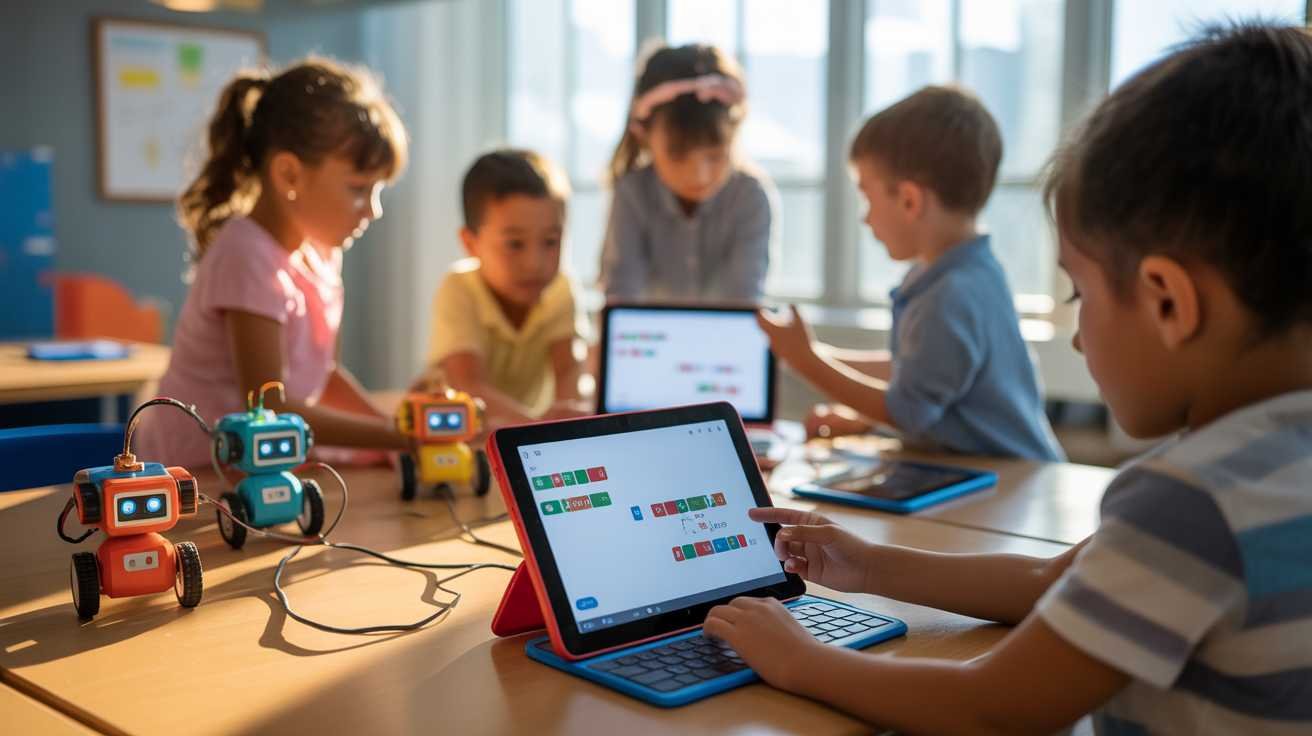
Walk into any modern classroom and you can almost feel the pulse of change humming through the air. The walls may still hold colorful posters and inspirational quotes, but today’s learning landscape is different – alive with technology, driven by curiosity, and fueled by the logic of code. The question isn’t whether coding and computational thinking belong in K-12 education anymore – it’s how fast teachers can integrate them before their students fall behind. The digital world is evolving at breathtaking speed, and with every passing semester, the demand for early exposure to coding and problem-solving grows more urgent. Teachers who act now are not only equipping their students with technical skills but are igniting creative confidence that will shape their futures. The stakes are enormous: industries across the globe are desperately seeking innovators, developers, and thinkers who can solve real-world problems with the precision and imagination that coding teaches. This is the age of digital fluency, and hesitation is no longer an option. If your classroom isn’t yet exploring interactive coding tools like k’nex education, Scratch, or robotics-based platforms, you’re missing out on transformative potential that could define your students’ entire academic trajectory. The moment to act is right now – before opportunity slips into the hands of those who dared to begin sooner.
Why Coding Literacy Is the New Reading and Writing
There was a time when literacy meant reading and writing alone, but the definition of being “literate” has evolved dramatically. In today’s digital era, coding literacy stands alongside traditional literacy as an essential life skill. Computational thinking trains the brain to break down problems, analyze data, and craft logical sequences of steps – skills that stretch far beyond computer screens and into every academic subject. Imagine a student who can use code to simulate chemical reactions, calculate trajectories in physics, or generate data-driven art. These are not futuristic fantasies – they’re daily classroom realities in schools that have embraced modern coding tools. The difference between a classroom that teaches coding and one that doesn’t is night and day. It’s the difference between passive learning and active creation, between consumption and innovation. K’nex Education has emerged as one of the most tactile, engaging ways to bridge the gap between abstract coding logic and physical understanding, helping students visualize how code translates into movement, function, and real-world design. When children physically construct systems and then bring them to life with digital commands, they’re not just coding – they’re thinking critically, inventing boldly, and mastering the interconnected nature of modern problem-solving. The urgency to weave coding into everyday instruction has never been greater, because each year of delay means another generation of students stepping into the future unprepared.
K’nex Education: Building the Bridge Between Code and Creativity
At the heart of experiential STEM learning lies k’nex education – a powerhouse platform where imagination meets engineering. Students don’t just build models; they construct stories of innovation that pulse with movement and logic. Picture a classroom alive with clattering gears, spinning axles, and the electric thrill of students watching their coded commands bring mechanical creatures to life. This sensory connection is what makes K’nex Education stand out – it transforms coding from abstract syntax into tangible creativity. Teachers who integrate this tool are seeing exponential growth not just in engagement, but in comprehension. Young learners suddenly grasp the why behind the code; they understand cause and effect, input and output, iteration and debugging, all while their fingers twist colorful connectors into bridges, vehicles, and robots. K’nex education doesn’t just teach kids how to code; it teaches them how to think. And in a world that values innovators over imitators, that skill is priceless. The momentum behind schools adopting K’nex Education is growing, and those who delay will soon find themselves scrambling to catch up. Every district report, every success story, every glowing teacher review reinforces one message loud and clear – this is not just a trend. This is the cornerstone of tomorrow’s learning environment, and the time to build with it is now.
Empowering Teachers with Easy-to-Use Coding Platforms
For many educators, the fear of integrating coding into the classroom comes from a simple misconception: that you need to be a programmer yourself. The truth couldn’t be further from it. Modern platforms like k’nex education, Code.org, and Tynker have made it effortless for teachers to deliver powerful coding lessons without ever needing a computer science degree. The interfaces are intuitive, lessons are pre-designed, and support communities are vibrant. Teachers can log in, follow the guides, and instantly immerse their students in projects that merge math, science, and logic with creative exploration. The sense of empowerment is palpable; once hesitant teachers now lead bustling maker labs where students design coded roller coasters, robotic arms, and sensor-driven vehicles. And when the first blinking light or motor hums to life, the look on a student’s face says everything – the learning is alive. Time is of the essence. Schools that delay teacher training risk leaving both educators and students in the analog past. With accessible certification programs and responsive customer support from trusted brands like K’nex Education, it has never been easier – or more urgent – to step into the future of teaching. Those who start today will become the leaders of a new generation of digitally fluent educators who shape not just learners, but future innovators.
From Play to Purpose: Turning Curiosity into Computational Mastery
Children are naturally curious. They build, break, rebuild, and experiment with the world around them. The beauty of integrating coding and computational thinking into that innate play is that it turns simple curiosity into deliberate creation. K’nex education embodies this perfectly – its modular design allows students to physically explore mechanics before translating those concepts into coded logic. The result is a seamless connection between tactile play and digital precision. Imagine a group of fifth graders building a miniature wind turbine with K’nex pieces, then programming it to measure rotational speed or energy output using sensors. Every line of code becomes a reflection of their understanding of physics, math, and problem-solving. It’s not playtime – it’s purposeful discovery. And as students experience success, the dopamine rush of achievement cements their learning, turning fleeting curiosity into sustained engagement. This transformation from passive learners to active problem solvers is exactly what modern education needs. Every moment you wait to introduce these experiences is a missed chance to capture that wonder while it’s still burning bright. Schools that embrace tools like K’nex Education are building futures where creativity and logic walk hand in hand, and those that don’t risk fading into irrelevance as the world charges ahead.
Data-Driven Results: Why Schools Are Seeing Rapid Gains
Educators and administrators crave evidence – and the numbers don’t lie. Schools that have adopted coding tools like k’nex education report dramatic increases in STEM engagement, problem-solving accuracy, and long-term academic performance. Research conducted by multiple education institutes shows up to a 40% improvement in critical thinking test scores and a significant rise in student collaboration. Teachers notice that even students who typically struggle with abstract concepts begin to excel once they can visualize outcomes through hands-on projects. There’s something almost magical about watching data come to life through construction and coding. When students write a simple script and see their structure move, they internalize cause-and-effect relationships faster than any worksheet could teach. Trusted industry partners like K’nex Education back their products with rigorous testing, verified results, and responsive customer service to ensure that every classroom investment translates into measurable success. Schools that are slow to adopt such data-supported innovation will soon find themselves competing against districts whose students are coding, building, and thinking years ahead. In the race toward 21st-century readiness, there is no time for hesitation – data-driven education waits for no one.
Real Classrooms, Real Transformations
Walk into a classroom that’s using k’nex education and you’ll immediately sense the difference. There’s an electric buzz, a hum of collaboration, a sense that something meaningful is happening. Students move between digital screens and physical structures with ease, translating code into creation and back again. One middle school teacher in California shared how her students, many of whom had struggled with traditional learning methods, found confidence through building programmable models. “They finally saw their ideas take shape,” she said. “Coding stopped being abstract – it became something they could touch.” Across the country, similar stories are unfolding. Elementary students in Ohio have programmed K’nex vehicles to navigate obstacle courses, while high schoolers in New York have used the kits to model sustainable energy systems. Each story underscores the same truth: when students build with purpose, they learn deeply. The ripple effects are enormous – improved attendance, higher test scores, and an infectious enthusiasm that spreads through the entire school community. The transformation is real, and it’s accelerating. Every educator who has taken the leap into this new era of computational learning echoes one urgent message: don’t wait. The future isn’t coming – it’s already here.
Security, Licensing, and Trusted Support: What Makes a Reliable Platform
When schools choose a learning tool, they need more than flashy tech – they need trust, transparency, and long-term reliability. That’s why k’nex education and similar certified platforms stand out. Each component, from physical materials to digital interfaces, meets rigorous safety and educational standards. Teachers can confidently integrate K’nex into their curriculum knowing that every product is classroom-safe, fully licensed, and compliant with educational regulations. Even more, the digital extensions offer secure environments where students can explore coding without exposure to unsafe online elements. Responsive customer service and verified training programs ensure educators always have guidance and real-time support. Schools that have partnered with K’nex Education consistently praise their dedicated service teams for quick troubleshooting, dependable updates, and a sense of community that fosters continuous growth. This level of trust transforms anxiety into confidence and complexity into creativity. With K’nex Education’s official site offering resources, certifications, and classroom bundles, teachers have no reason to delay adoption. In an educational marketplace crowded with unverified options, choosing a secure, trusted, and proven system isn’t just smart – it’s essential. Every day spent waiting is another day your students could have been building the future.
The Urgency of Now: Don’t Let Opportunity Slip Away
Every revolution has a window of opportunity, and the integration of coding and computational thinking into K-12 education is no exception. We are standing at the crossroads of technological evolution, where those who act quickly will shape the next generation of innovators. k’nex education isn’t just a classroom tool – it’s a movement toward experiential, creative, and purpose-driven learning. Teachers who seize this moment will transform their classrooms into incubators of innovation, preparing students for jobs that don’t yet exist and challenges that demand unprecedented creativity. The FOMO is real: while some schools are still debating how to introduce coding, others are already celebrating national STEM awards and student-led robotics competitions powered by K’nex Education projects. The divide between early adopters and latecomers is widening with every semester. Act now, before that gap becomes irreversible. Visit K’nex Education, explore their curriculum-aligned kits, and bring the power of creation into your classroom. Your students deserve the chance to become the thinkers, builders, and problem solvers of tomorrow – and that journey begins with your decision today.
If you want to empower students in the digital age, explore innovative methods that incorporate niger education into cybersecurity lessons for a comprehensive understanding of online privacy.
If you want to understand the transformative impact of technology on logistics, explore How Courier Software is Revolutionizing Final Mile Delivery and discover the future of efficient shipping solutions.