
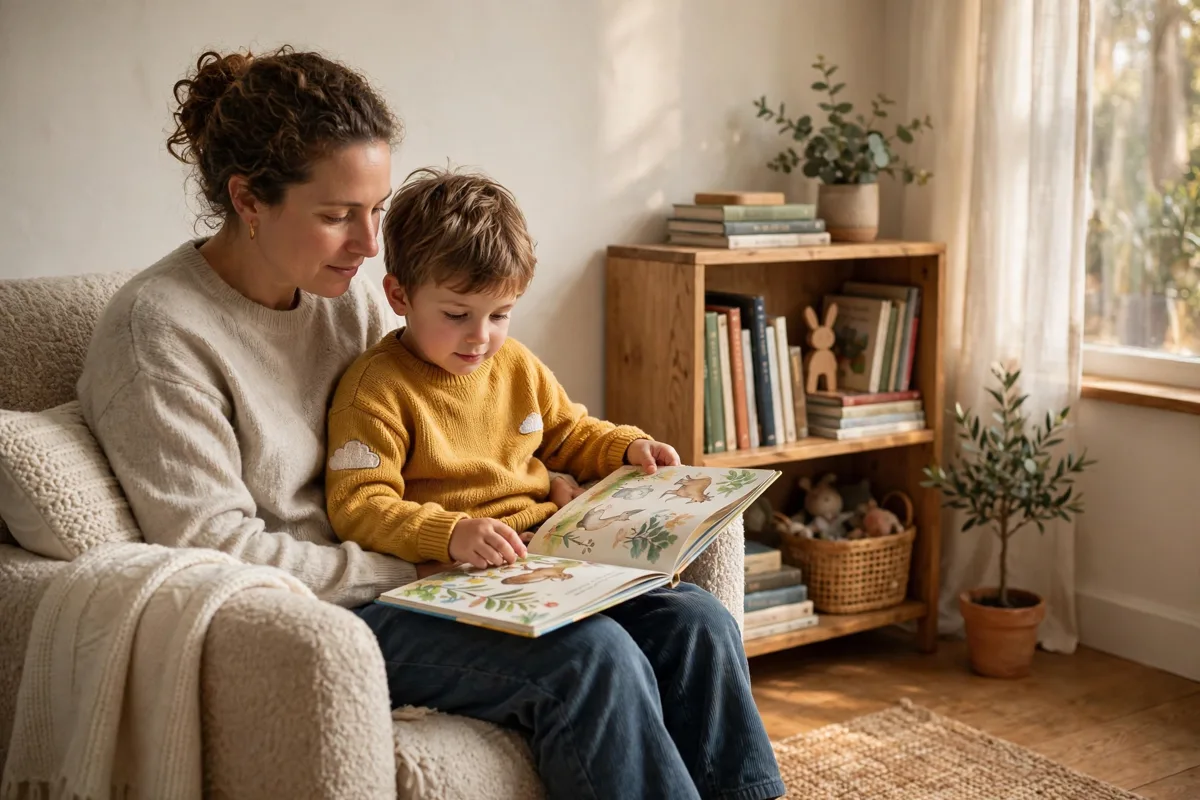
Helping a child become a reader is one of the most valuable things a parent can do, and it does not require special training or expensive materials. What it requires is regularity: small amounts of reading, built into everyday life, until books feel like a normal and enjoyable part of the day. This guide explains how to build a reading habit for children step by step, from choosing the first books to keeping the habit alive as your child grows.
Why a Reading Habit for Children Matters
Children who read regularly build vocabulary, comprehension and concentration without formal lessons. Stories expose them to sentence structures and ideas they would not meet in everyday conversation, and following a plot trains memory and attention. Just as importantly, reading together is a calming shared activity that strengthens the bond between parent and child. The goal at the start is not academic performance; it is association. If a child connects books with comfort, curiosity and your attention, the habit has a foundation that school alone cannot provide.
Start with the Right Books
The best book for building a habit is the one your child actually wants to open. Let them choose whenever possible, even if their taste runs to comics, joke books or stories about dinosaurs for the tenth week in a row. Choice creates ownership, and ownership creates motivation. Keep a small, changing selection within easy reach at home: a basket in the living room, a shelf by the bed, a book in the car. Libraries are ideal for this because children can experiment freely and abandon books that do not suit them without cost or guilt. For inspiration on choosing widely, see our collection of kids’ books that inspire young minds, which shows how varied children’s reading can be.
Match the book to the reader, too. A book that is slightly too hard turns reading into a struggle, while one that is far too easy can bore a confident reader. A useful test for independent reading is whether your child can read a page comfortably and retell what happened. For shared reading, you can choose richer stories, because your voice carries the difficult parts.
Make Reading Part of the Daily Routine
Habits form around cues, and the strongest cue is a regular time. Bedtime is the classic reading moment because it is predictable and calm, but any anchor works: after breakfast, after school, or during a quiet quarter of an hour in the afternoon. Even ten to fifteen minutes a day is enough to build momentum; consistency matters far more than duration. Treat the time as protected, like brushing teeth, rather than something that happens only when the day allows. Our guide to simple daily routines that encourage responsibility and independence in children shows how reading can sit alongside other healthy routines so children come to expect and enjoy them.
Reading Together and Reading Aloud
Shared reading is where the habit really takes root. Reading aloud lets children enjoy stories beyond their independent level, hear how fluent reading sounds, and ask questions as they go. Pause to talk about the pictures, predict what might happen next, and connect events in the story to your child’s own experience. As children begin to read themselves, take turns: you read a page, they read a page. If they stumble on a word, give them a moment before helping, and praise the effort rather than only the accuracy. Keep these sessions relaxed. The moment reading together feels like a test, it stops being the part of the day your child looks forward to.
Encouragement That Actually Works
Children repeat what gets noticed. Specific praise (“You worked out that long word by yourself”) is more powerful than general praise, and celebrating small milestones, such as finishing a first chapter book, tells your child that progress matters. Avoid paying for pages or turning reading into a transaction; rewards can work briefly, but interest lasts longer. Gentle, positive reinforcement of the kind described in our article on promoting positive behaviour through reinforcement and encouragement applies just as well to reading as to any other habit you want to grow. Let your child see you reading, too. A home where adults read for pleasure sends a message no lecture can match.
Handling Reluctant Readers
Many children go through phases of resisting books, and pressure usually makes it worse. Look for the reason first: the books may be too difficult, the timing may clash with when your child is tired, or screens may simply be winning the competition for attention. Try a different format, such as audiobooks on a journey, graphic novels, or non-fiction about a current obsession. Agree on screen limits that leave space in the day, and be patient: a child who refuses stories at six may devour novels at nine. Reading also supports imagination and thinking far beyond literacy itself, as our article on nurturing creativity, imagination and critical thinking explains, so the effort is worthwhile even when progress feels slow.
Making Time When Life Is Busy
Many parents support the idea of daily reading but struggle to find the time, especially on working days. The solution is to think smaller and more flexibly. Ten minutes counts. So does a story in the car, a poem at the breakfast table, or an older sibling reading to a younger one. Keep a book in the places where waiting happens, such as the kitchen, the car and your bag, and those small gaps in the day become reading time. On days when even that fails, an audiobook on the way home keeps the story habit alive. What matters is not a perfect streak but the message, repeated over weeks and months, that reading is a normal part of family life rather than an extra task squeezed in when everything else is done.
As Children Grow: From Picture Books to Independent Reading
The habit changes shape as your child grows. Picture books give way to short chapter books, then to longer fiction and non-fiction chosen independently. Keep talking about books even when you no longer read every one together: ask what they are reading, what they think of the characters, and what they plan to read next. These conversations quietly build the habit of thinking about their own learning, a skill explored further in our guide to metacognition and studying smarter. Continue making books easy to get, and respect new tastes even when they surprise you.
Building a reading habit for children is a long game played in small daily moves: the right books within reach, a regular time, your voice and attention, and encouragement that focuses on enjoyment. Start with ten minutes tonight, and let the habit do the rest.